
Behind Every Dish Lies a World We Never See
ARCA Tulum · 19 de agosto de 2026
A dish can reach the table in a matter of seconds. Its story, however, may have begun much earlier: with a producer, a harvest, a catch, a sourcing decision, a technique, a person, and a chain of work that rarely appears in front of the guest. At ARCA Tulum, understanding that dimension changes the way we see the value of a dining experience.
What lies behind a dish at ARCA Tulum?
Behind a dish at ARCA Tulum there is a network of ingredients, people, territory, technique and culinary decisions that begins long before service starts.
ARCA Tulum describes its own cuisine as micro-seasonal, working directly with small producers, farmers, fishermen and foragers from the region. Its menu shifts according to the availability of ingredients and the rhythms of the local flora and fauna.
That means the experience arriving at the table is not simply the result of a recipe. It is the result of a chain.
An ingredient never appears by chance
When a restaurant works with local, seasonal products, availability itself becomes part of the cooking. That is how the ARCA Tulum menu takes shape.
The MICHELIN Guide describes precisely this quality in ARCA Tulum: a menu that changes frequently because it is determined by the freshest products available from a broad network of trusted farmers and suppliers.
This dynamic has an important consequence. The menu cannot be understood as something entirely separate from its territory. What happens in the soil, in the sea and across the seasons ends up shaping what happens at the table. That relationship has a cost. It also has a value.
There is a difference between buying an ingredient and building a relationship
Working with local producers is not simply a matter of sourcing nearby raw materials. It means developing relationships. Knowing who produces. Understanding what they can offer. Respecting their timing. Recognizing seasonality.
And, in certain cases, accepting that an ingredient may disappear from the menu because it is no longer available under the conditions the restaurant considers appropriate.
ARCA Tulum notes that its relationships with small producers allow it to represent the diversity of the Yucatán Peninsula while contributing to the community that surrounds it.
When we talk about local ingredients, we are not only talking about geographic distance. We are talking about connection.
Fire also demands work we never see
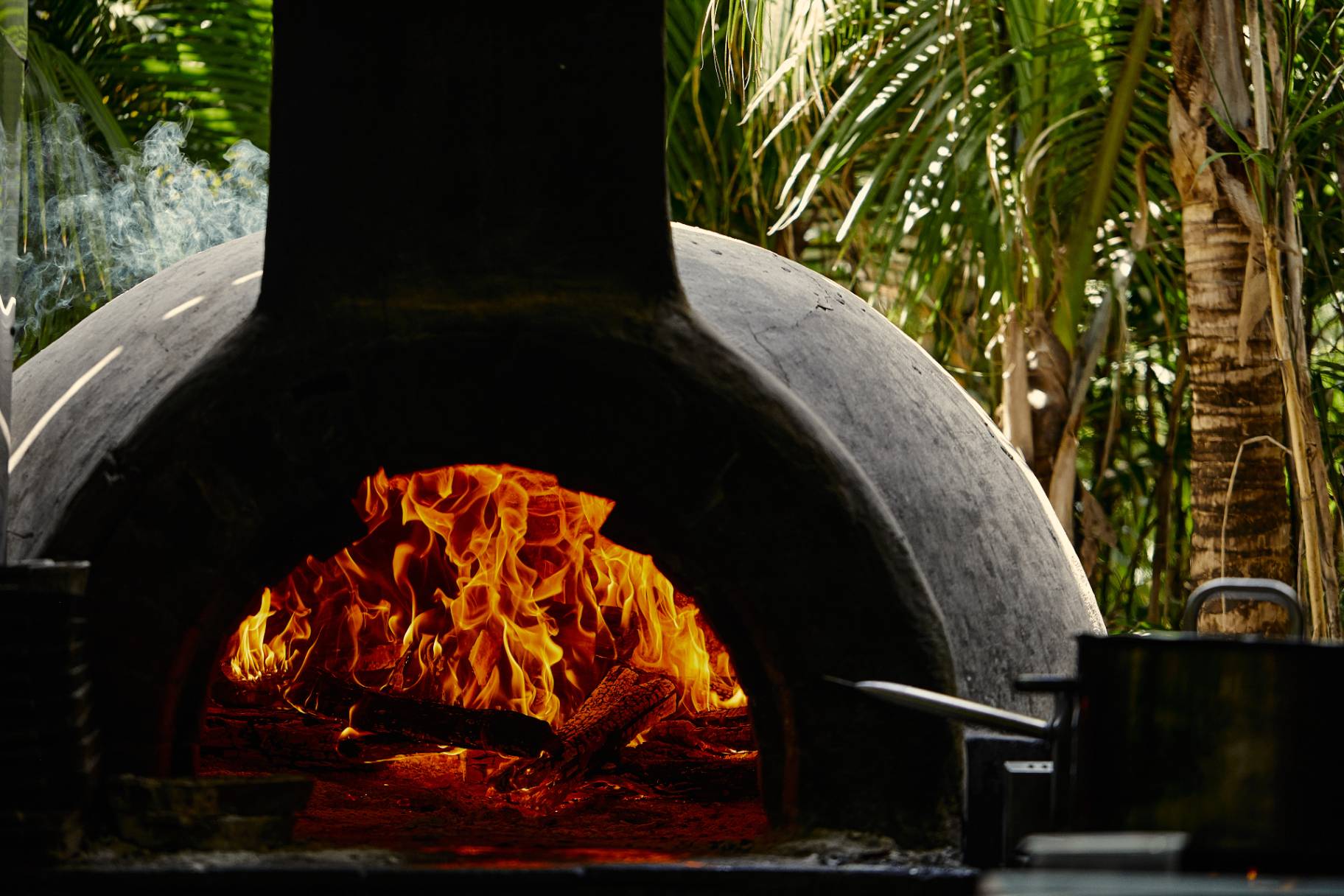
At ARCA Tulum, fire is one of the central elements of the kitchen. But fire is not merely a technique. It determines temperatures, timing, textures, aromas and the ways an ingredient can be transformed.
ARCA Tulum's culinary approach is built around live-fire cooking, a characteristic the MICHELIN Guide also highlights when describing its contemporary and deeply personal cuisine.
What a guest perceives as a simple preparation can involve an enormous amount of knowledge. Knowing when to bring a product close to the fire. When to pull it away. What intensity to use. Which part of the raw material to preserve. Which flavor to let dominate. Apparent simplicity can conceal great complexity.
Invisible work is also part of the price
When a guest looks at the price of a dish, they usually see the result. They do not see the hours of preparation. They do not see the sourcing. They do not see the producer's work. They do not see the logistics. They do not see the mise en place. They do not see the trials. They do not see the decisions that led to discarding one preparation after another until the right one appeared. And they do not see all the people who make it possible for that dish to reach the table at exactly the right moment.
That is why talking about the value of a dining experience requires a wider lens. Price belongs to the moment of purchase; value belongs to everything that made that moment possible.
The territory also works behind the table
T Magazine México has described ARCA Tulum as a restaurant that brings together local product, technique and setting, highlighting the network of producers the restaurant has developed and the role seasonality plays in shaping the menu.
That relationship transforms the idea of a "local ingredient". It is no longer simply about stating that a product comes from the region. It is about allowing the region to have a voice within the experience. And perhaps that is one of ARCA Tulum's greatest strengths.
The territory does not appear only in the landscape surrounding the table. It also appears in what the table holds.
What we do not see is also part of what we enjoy
An immersive dining experience can feel spontaneous. The dish arrives. The fire burns. The service flows. The conversation continues. But behind that apparent ease lies a carefully built structure. And understanding it does not diminish the magic. It deepens it.
Because once we know that behind an ingredient there is a producer, behind a technique there is knowledge, and behind a dish there is a network of people, we stop looking only at food. We begin to see everything that had to happen for that moment to exist at all.
You can also browse more frequently asked questions about ARCA Tulum before your visit.
To see how this translates to the table, browse the ARCA dish gallery.
Frequently Asked Questions
Because its cuisine is built on seasonality and on the availability of fresh products from farmers, fishermen, foragers and other suppliers.
Yes. ARCA Tulum works with small producers, farmers, fishermen and foragers in order to represent the diversity of the Yucatán Peninsula and support the surrounding community.
Fire is one of the central elements of its kitchen, used as a tool to transform ingredients through different temperatures, timings and techniques.
The territory directly shapes the ingredients, the seasonality and the identity of the cuisine. At ARCA Tulum, that relationship is part of the dining experience itself, not only of the physical setting.
Related articles
The Value of an Experience You Cannot Take Home
A dish can be recreated. The exact combination of territory, fire, service and moment cannot. What lies behind the price of dinner.
What Is Open Fire Cuisine and Why Did Michelin Highlight It at Arca?
Fire as a philosophy, not a technique: what Open Fire Cuisine is, how it transforms flavor, and why Michelin highlights Arca Tulum.
Experimental Fine Dining in Tulum: Where Culinary Innovation Meets the Soul of Mexico
Why Tulum became one of Mexico's most creative dining destinations, and how experimental fine dining turns a meal into an experience.