
When a Territory Becomes a Language: How Tulum's Flavors Travel Beyond the Jungle
ARCA Tulum · 20 de agosto de 2026
Great cuisines do more than represent a place—they become the language through which that place is understood. When ingredients, landscape and culinary philosophy move together, a restaurant no longer exports dishes; it carries the identity of an entire territory.
Contemporary fine dining is increasingly defined not by luxury alone, but by authenticity. Around the world, travelers are looking for restaurants capable of expressing a genuine sense of place—where local ingredients, cultural memory and culinary technique come together to tell a story that could not exist anywhere else.
ARCA Tulum has become part of that conversation by building a cuisine deeply rooted in the Mayan jungle while allowing its ideas to resonate far beyond it.
How can a restaurant represent an entire territory?
A restaurant represents a territory when its cuisine reflects the landscape, ingredients, traditions and cultural identity from which it emerges. Rather than reproducing recipes, it interprets the relationship between people and place, allowing diners to experience a destination through food.
The world's most influential restaurants rarely begin with technique. They begin with geography. Mountains shape ingredients. Coastlines define flavors. Climate influences preservation. Communities pass knowledge from one generation to the next. Eventually, these elements become something larger than recipes. They become identity.
This philosophy appears consistently in ARCA Tulum's culinary approach, where seasonal local products and the biodiversity of the Yucatán Peninsula are treated not simply as ingredients, but as storytellers.
The Maya Octopus: when an ingredient becomes a narrative
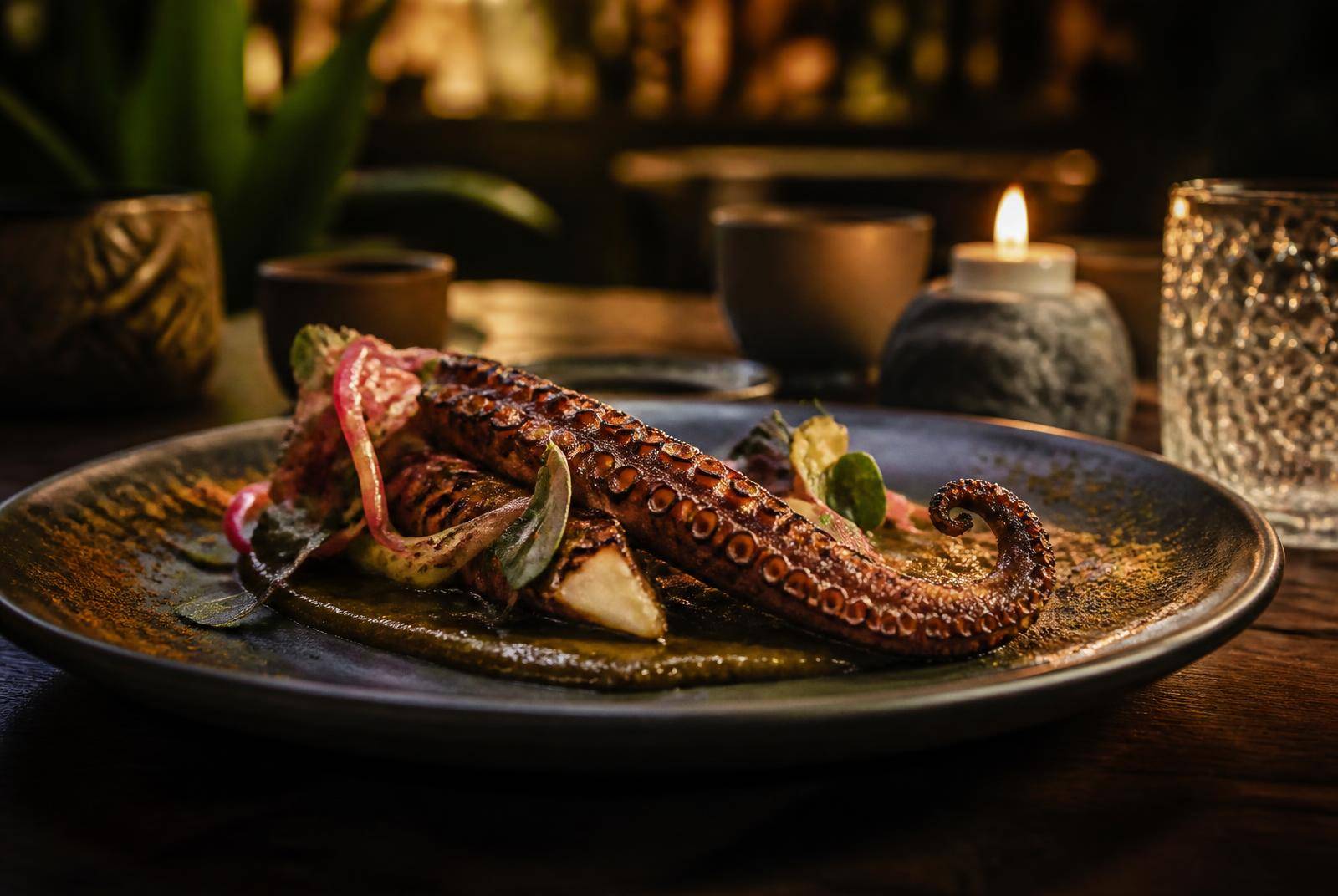
A recent video released by ARCA Tulum presents the preparation of its Maya Octopus, revealing far more than a signature dish. It illustrates how a single ingredient can connect local ecosystems, regional producers and contemporary cuisine into one coherent narrative.
The octopus is not presented as an isolated luxury product. Its significance comes from context. Its relationship with local waters. Its preparation. Its interaction with smoke and fire and accompanying ingredients.
Great ingredients become meaningful when they remain connected to the place that gave them life.
In this sense, cuisine becomes a language capable of translating landscape into experience.
When local identity travels internationally
A cuisine deeply connected to its territory does not lose authenticity when presented abroad. Instead, it offers international audiences an opportunity to understand the place from which it originates.
This idea became particularly visible during the collaborative dinner "Yo Soy Tulum" at Maito in Panama, where ARCA Tulum's team introduced diners to flavors inspired by the Mayan jungle through both food and cocktail culture, showing how a local cuisine finds a universal language.
The significance of such collaborations extends beyond visibility. They demonstrate that regional identity can travel without becoming diluted. A restaurant does not need to imitate global trends to participate in international conversations. Sometimes, remaining profoundly local is precisely what makes a restaurant globally relevant.
Why international perspectives matter
Editorial authority becomes stronger when independent voices reach similar conclusions. Brazilian publication Page9 included ARCA Tulum among the defining culinary experiences of the Riviera Maya, describing its ability to combine local ingredients, contemporary creativity and the natural environment into a distinctive dining destination.
Likewise, Traveler's Guide to Mexico highlighted Chef José Luis Hinostroza's philosophy of revealing the "real Tulum" through cuisine, emphasizing that authentic gastronomy can communicate the identity of a destination more effectively than any promotional campaign.
These perspectives matter because they originate outside the restaurant itself. They reinforce a broader editorial understanding: when different observers describe the same values independently, credibility naturally grows.
Luxury is increasingly measured by authenticity
Modern travelers increasingly seek experiences that cannot be replicated elsewhere. True luxury is no longer defined exclusively by exclusivity or sophistication. It is increasingly associated with originality, as the ARCA Tulum menu shows.
- An ingredient harvested within the region.
- A technique shaped by local tradition.
- A menu responding to seasonal cycles.
- A dining room immersed in its surrounding landscape.
These elements create something impossible to manufacture artificially. They create authenticity.
Restaurants like ARCA Tulum illustrate how fine dining can remain contemporary while preserving a profound connection to its environment. Instead of separating cuisine from nature, they allow nature to become part of the culinary narrative itself.
A territory becomes memorable when it finds its own culinary voice
Every destination possesses landscapes. Many have remarkable restaurants. Only a few develop a culinary language capable of expressing both simultaneously. When that happens, food becomes more than nourishment. It becomes interpretation. Travelers begin to understand a place not only through what they see, but through what they taste.
This may be one of contemporary gastronomy's most significant contributions to cultural tourism. Restaurants become cultural interpreters. Ingredients become storytellers. Meals become conversations with a destination.
The future of destination dining
As culinary tourism continues evolving, restaurants that remain deeply rooted in their local identity are likely to become increasingly influential. Innovation will continue to matter. Technique will continue to evolve. International collaborations will continue to grow.
Yet the restaurants most likely to leave lasting impressions may be those that never lose sight of where they began. Because memorable cuisine is rarely created by distancing itself from its origins. It is created by understanding them more deeply.
ARCA Tulum demonstrates that a territory does not become globally relevant by abandoning its identity. It becomes globally relevant by expressing that identity with clarity, confidence and respect. Ultimately, great restaurants do more than serve remarkable food. They become the language through which a place learns to tell its own story.
Territory shows on the plate too: ARCA dish gallery.
Frequently Asked Questions
A restaurant represents its region when its cuisine reflects local ingredients, traditions, landscapes and cultural identity rather than simply reproducing recipes.
Because it illustrates how a single ingredient can connect ecosystems, local producers and culinary storytelling, transforming a dish into an expression of place.
They demonstrate that a cuisine deeply rooted in its own territory can engage global audiences without compromising its identity.
Culinary tourism allows travelers to understand destinations through local food traditions, ingredients and cultural narratives rather than sightseeing alone.
When respected publications from different countries identify similar qualities in a restaurant independently, they reinforce credibility and broaden the conversation around its culinary philosophy.
Authenticity has become one of the defining characteristics of modern luxury, as diners increasingly value experiences that are inseparable from the places where they are created.
You can find more details in the frequently asked questions about ARCA Tulum.
Related articles
What Is Open Fire Cuisine and Why Did Michelin Highlight It at Arca?
Fire as a philosophy, not a technique: what Open Fire Cuisine is, how it transforms flavor, and why Michelin highlights Arca Tulum.
Behind Every Dish Lies a World We Never See
A producer, a harvest, a catch, a technique. The chain of work that happens before a dish ever reaches the table.
ARCA Tulum Brings Together Julia and Bar Santana: A Landmark Celebration of Latin America's New Hospitality
On July 2, 2026, ARCA Tulum hosted Julia (Argentina) and Bar Santana (Brazil) in the Mayan jungle for a landmark celebration of Latin America's new hospitality.